Morning Row
a relaxing rowing machine coach on a quiet low-poly river
Live at craigloftus.net/poly-rower. Source on github.com/craigloftus/poly-rower.
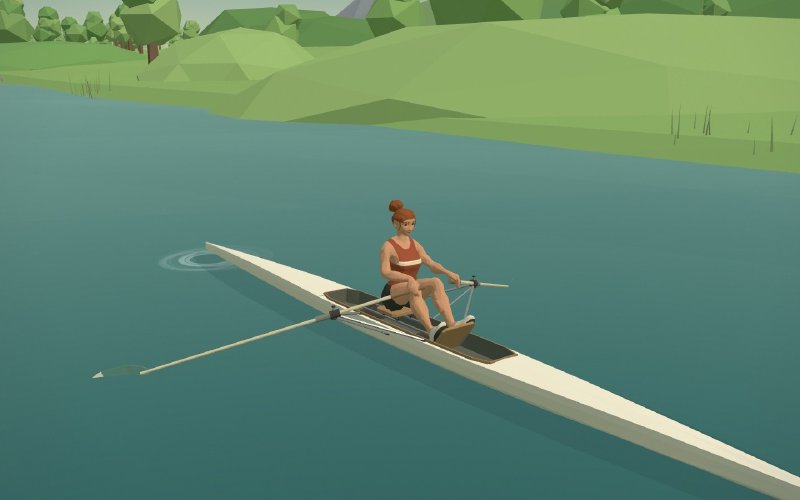
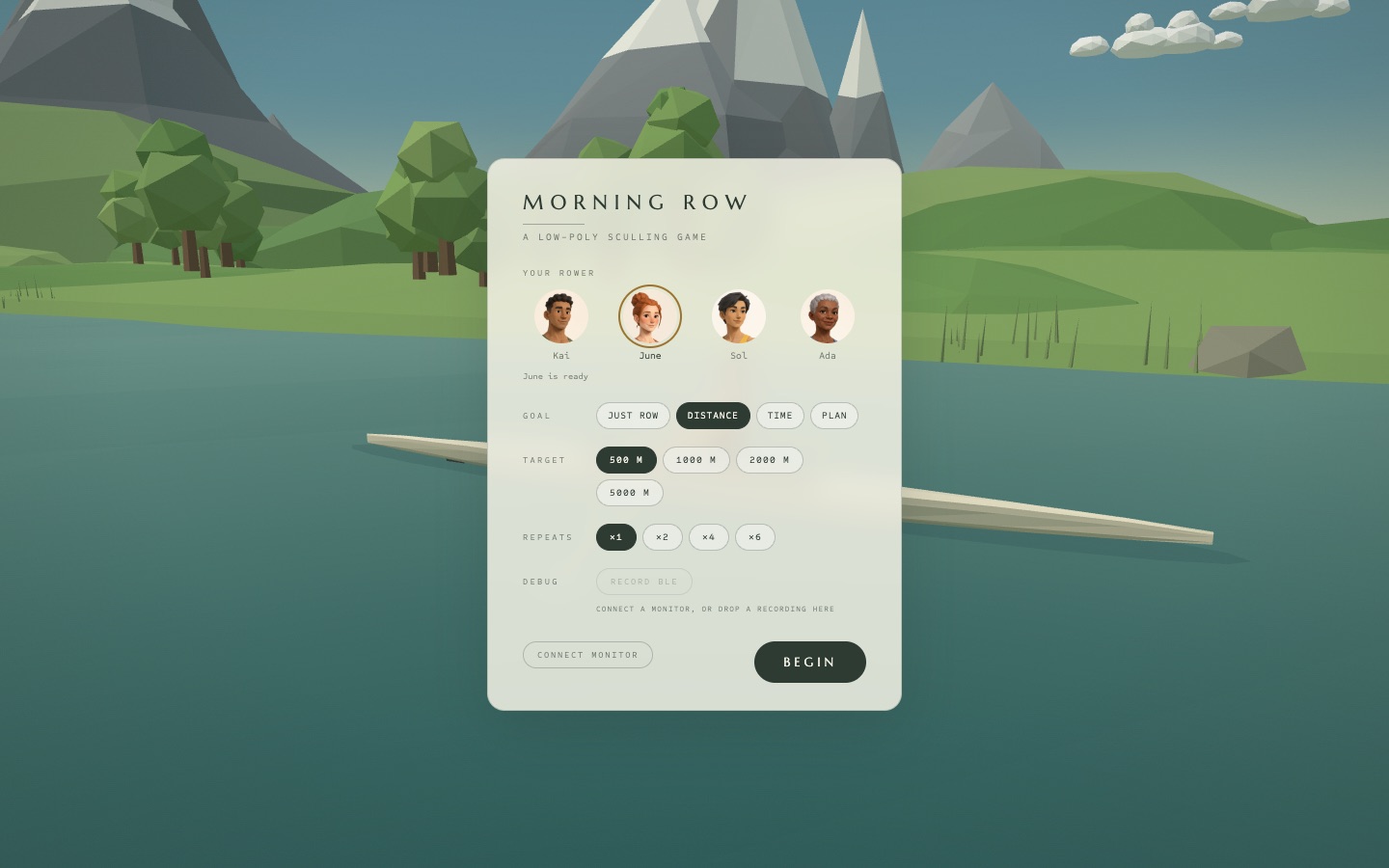
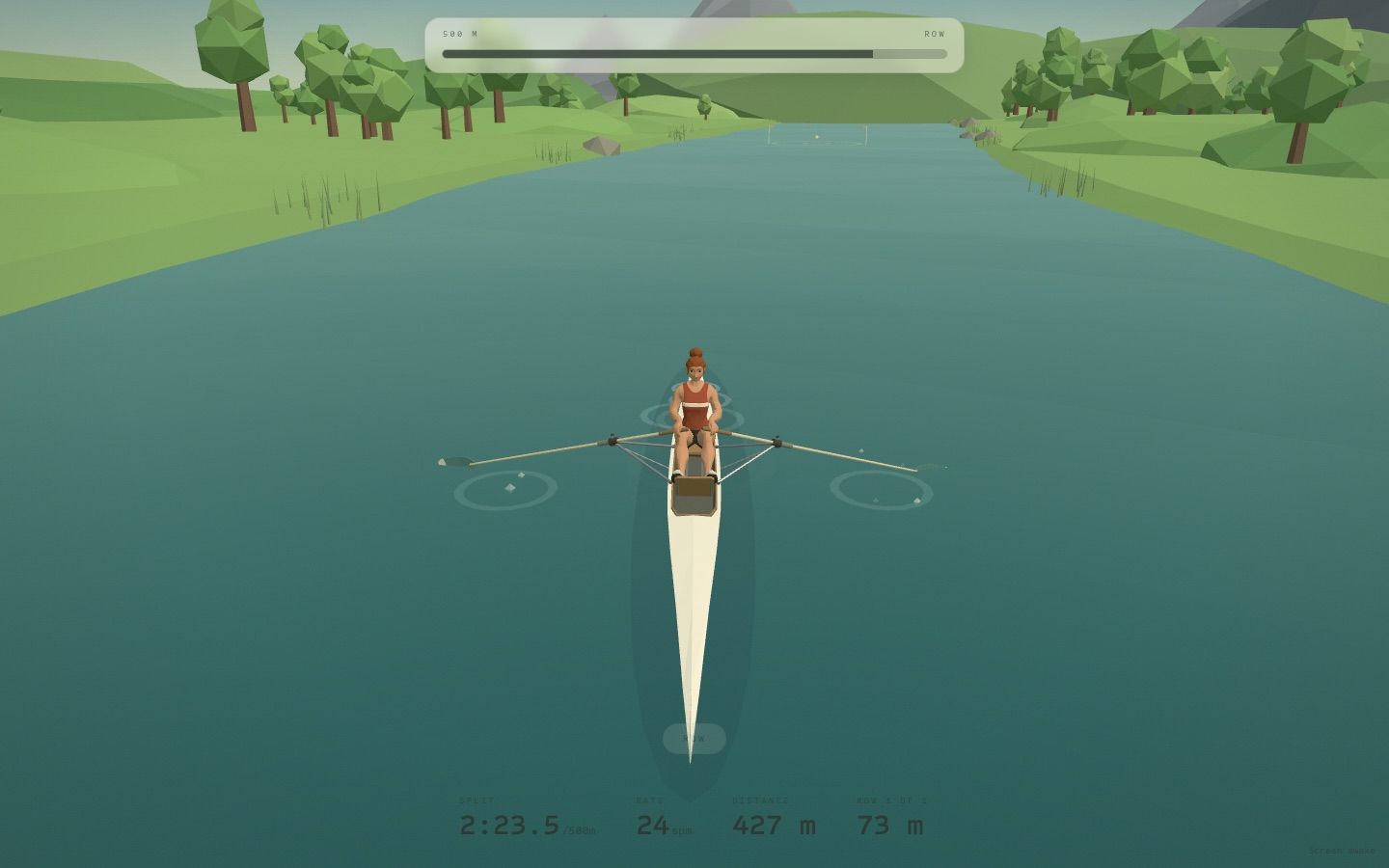
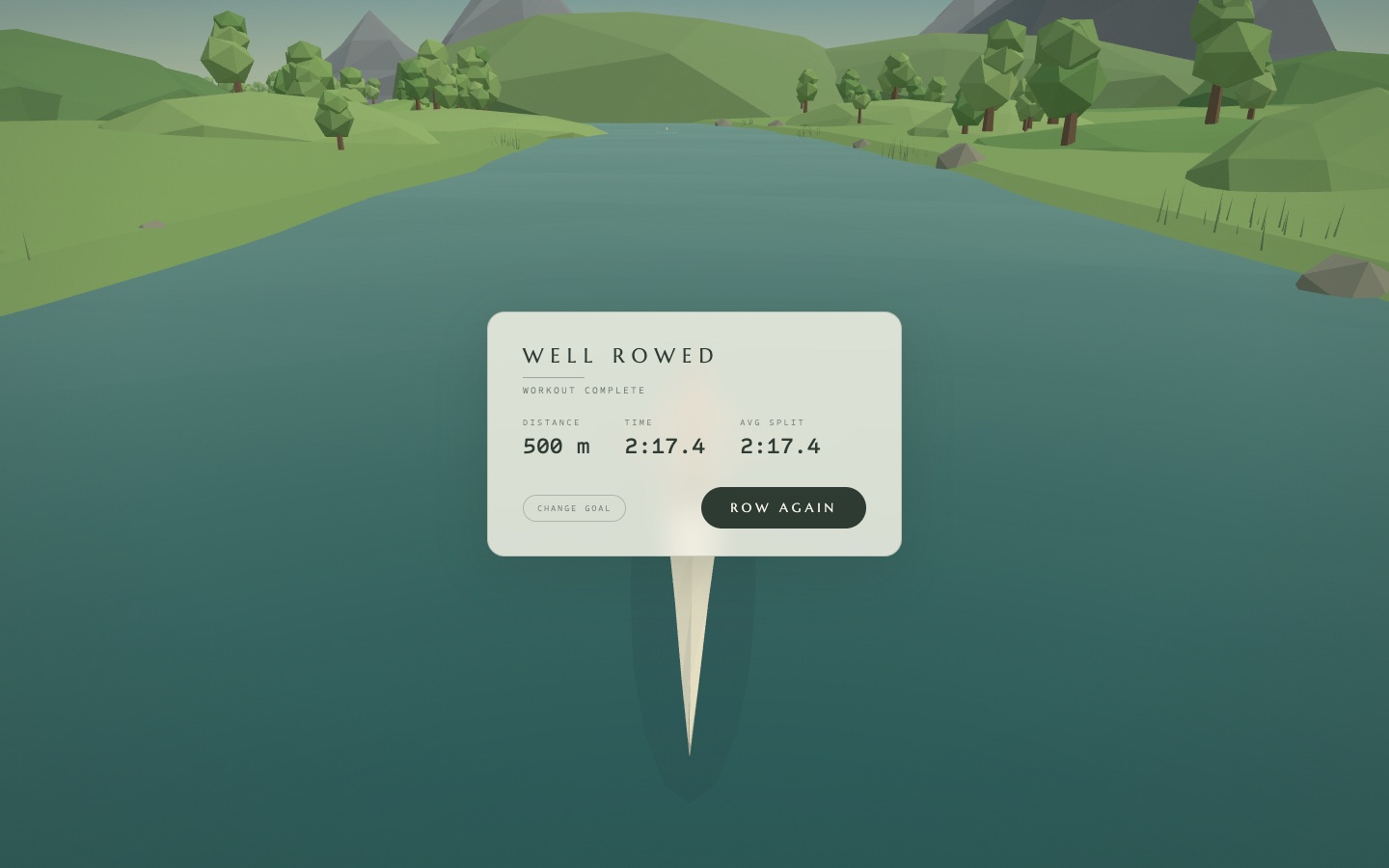
Morning Row is a pared-back rowing coach that runs in the browser: one single scull on a quiet low-poly river, rowed with the space bar or from a real rowing machine over Bluetooth. I made it for myself, to play with agentic 3D modelling and to have a very simple rowing experience.
It is a work in progress. Next is a simple way to set up more complex rowing routines than the usual apps allow.
The stroke has an order
A rowing stroke is a sequence. On the drive the legs push first, then the back swings, then the arms pull. The recovery runs it backwards: hands away, body over, and only then the slide. If the knees come up early the handles hit them.
Morning Row keeps to that order. stroke.js holds one number, the phase from 0 to 1 through either the drive or the recovery, and the seat, the back, the arms and both oars all take their position from it. The legs are flat 58 percent of the way through the drive. The seat does not start back until 43 percent of the way through the recovery.
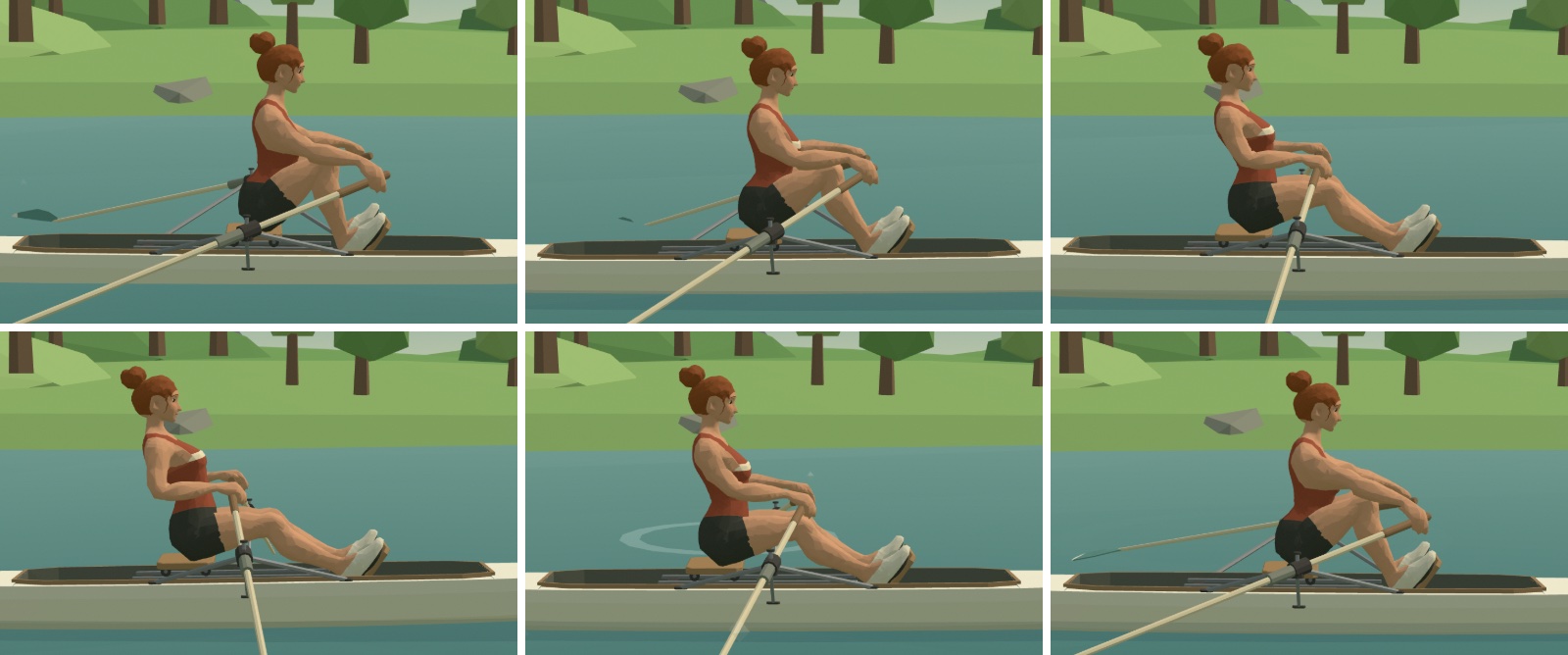
One stroke, frozen at six phases. Top row is the drive: catch, legs, back and arms. Bottom row is the finish, hands away, then the slide. The legs stay flat until the hands have gone past the knees.
The drive takes 0.85 seconds and the recovery 1.65, which is 24 strokes a minute with the space bar held. Let go and the rower finishes the stroke, pushes the hands away and waits there. Thrust comes only during the drive and drag never stops, so the boat surges and slows inside every stroke, between about 2.9 and 4.7 metres a second.
A rowing machine that speaks Bluetooth FTMS, which covers the Concept2 PM5 and most smart rowers, replaces the space bar in Chrome or Edge. Its stroke rate stretches the same cycle and its pace carries the boat.
Still tuned by hand
The timings and the thrust curve are hand-tuned. The goal card has a debug row that records every Bluetooth notification a connected machine sends, so the stroke can be fitted to a real one. That fitting has not been done.
The README covers the river, the four rowers and the training plan.